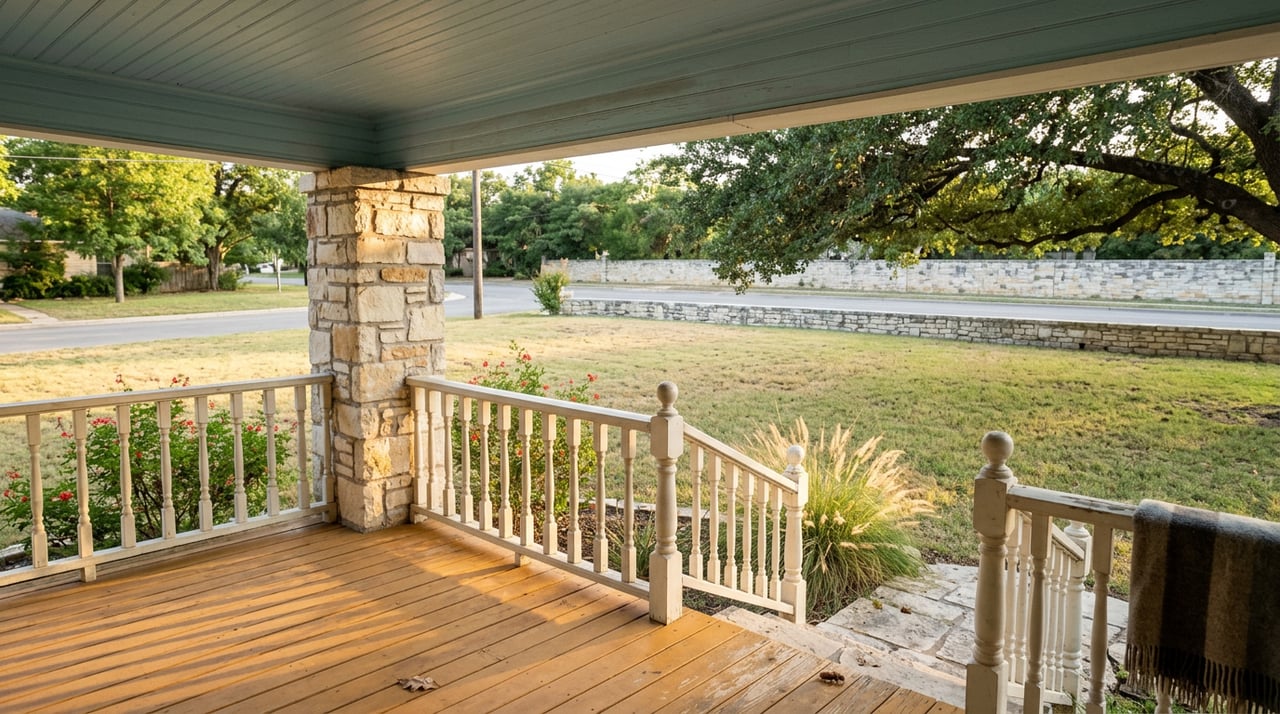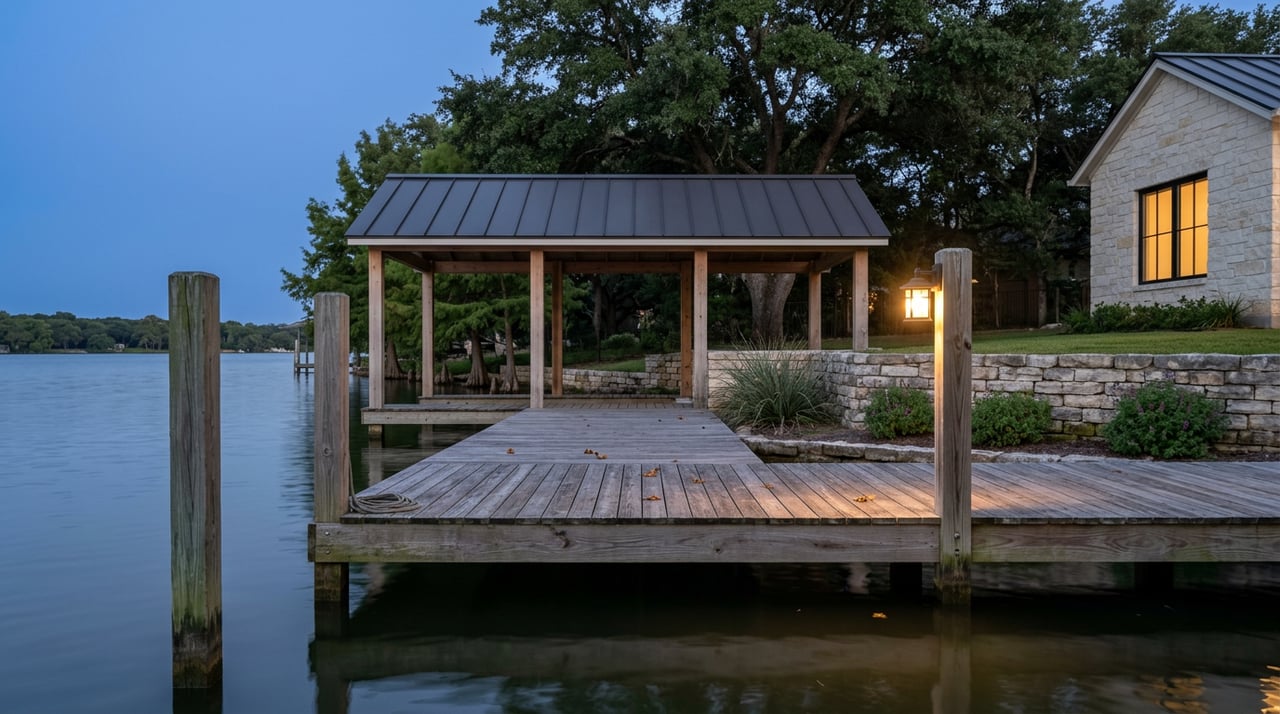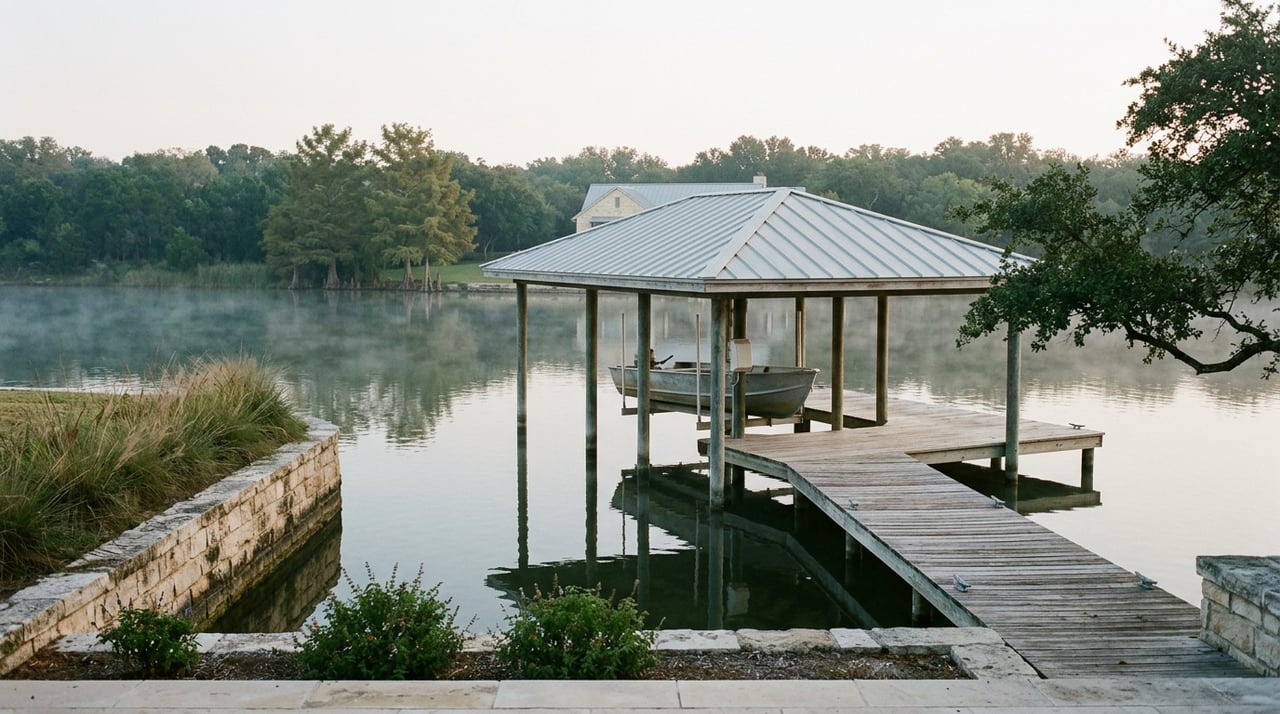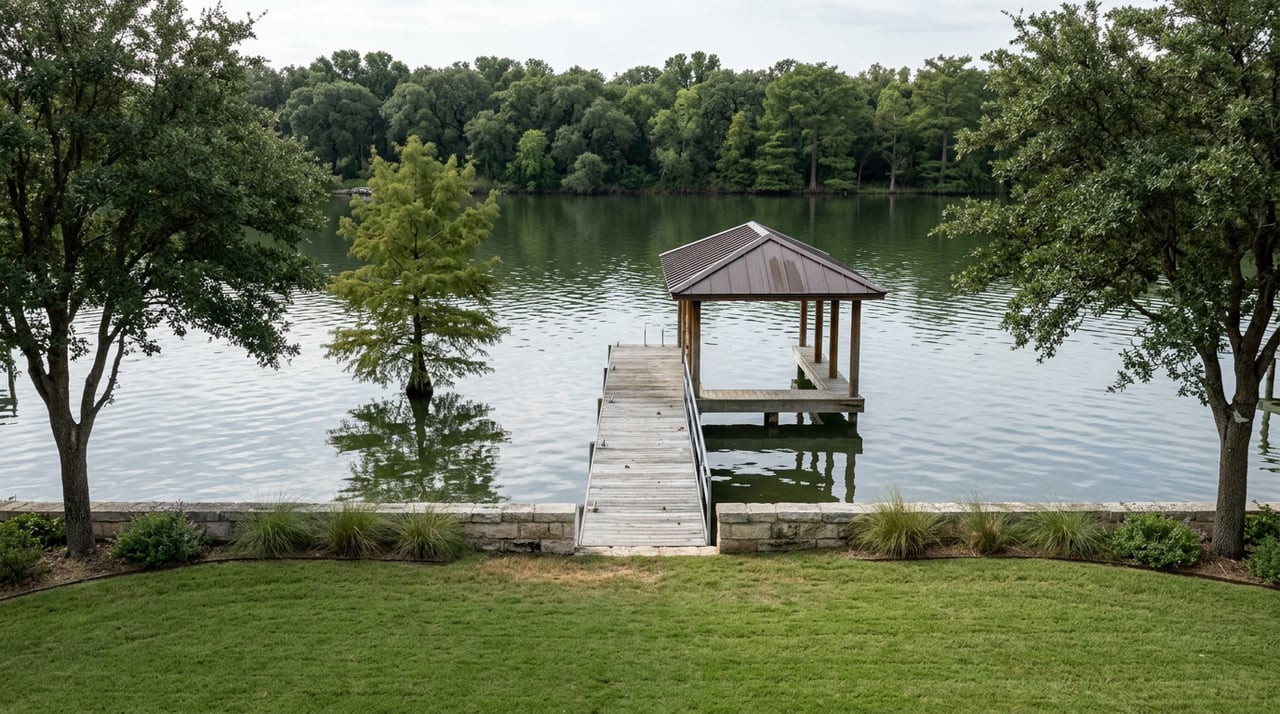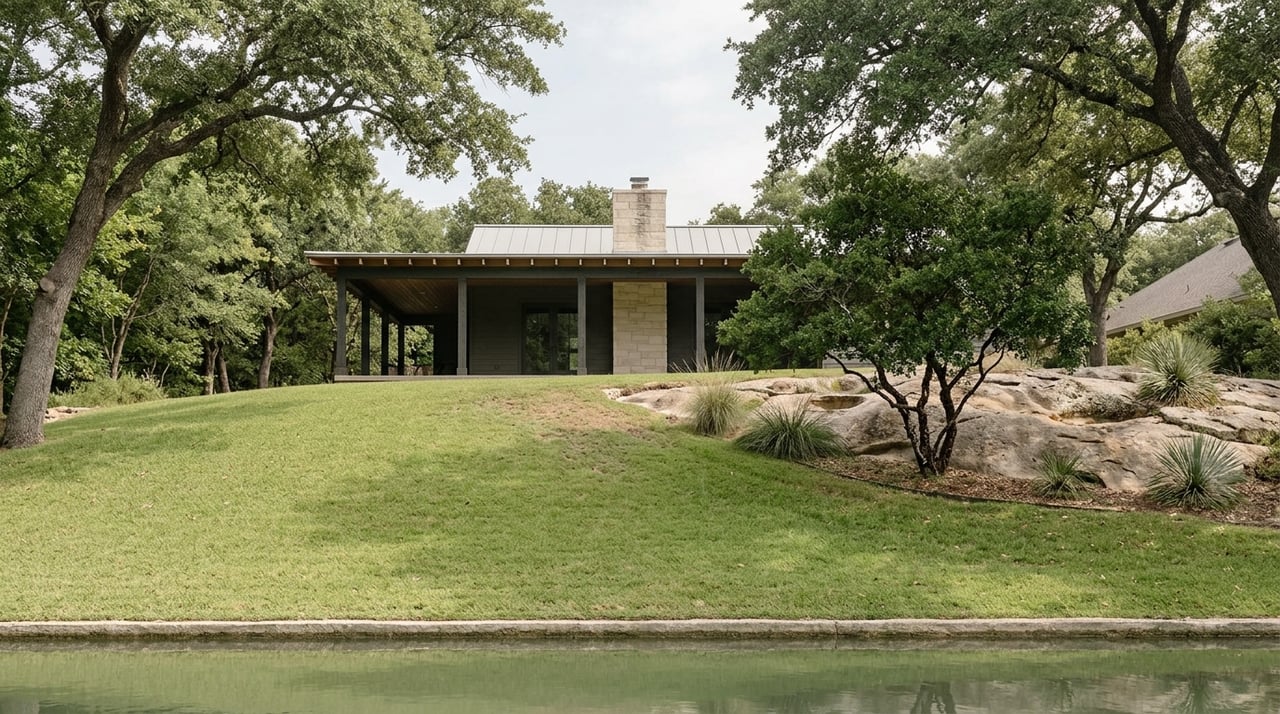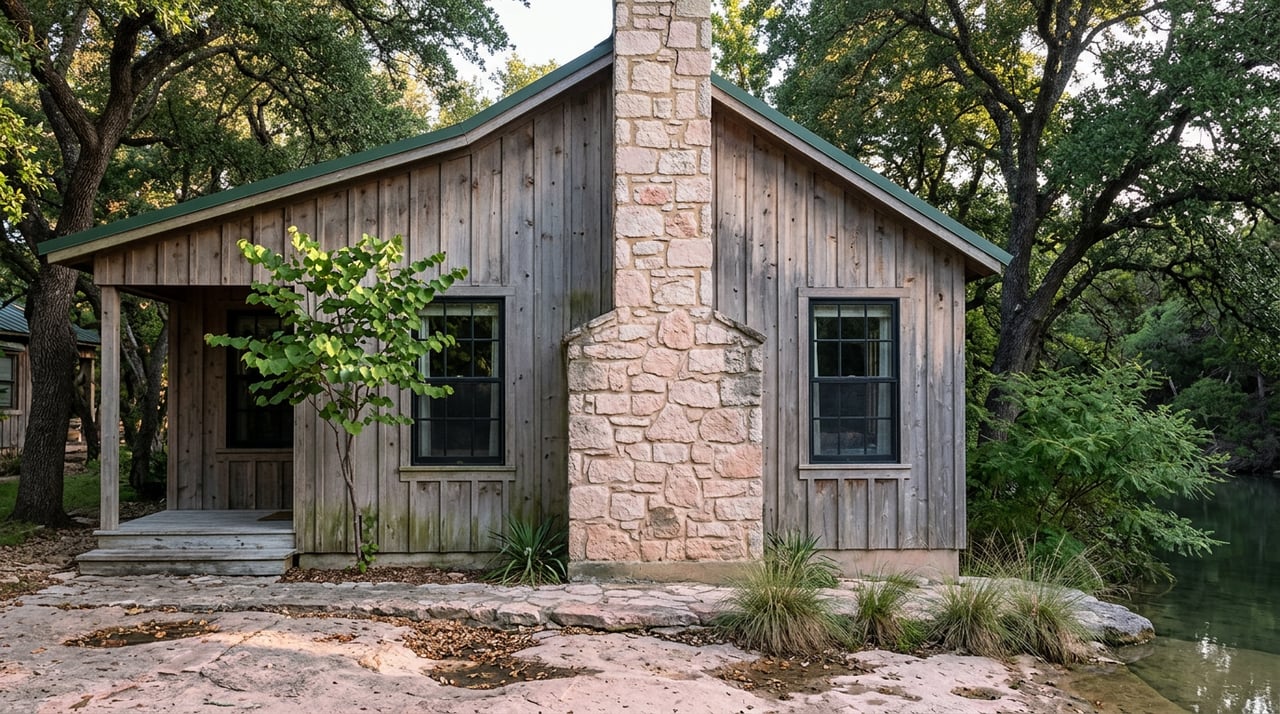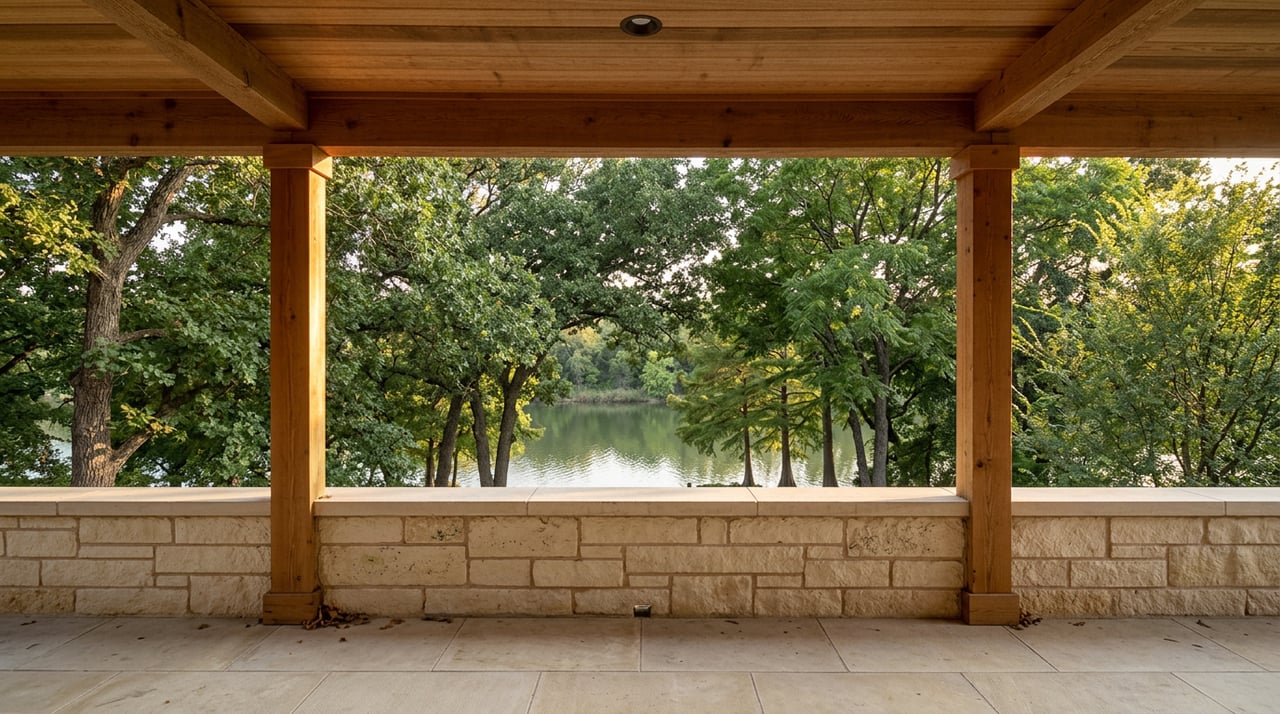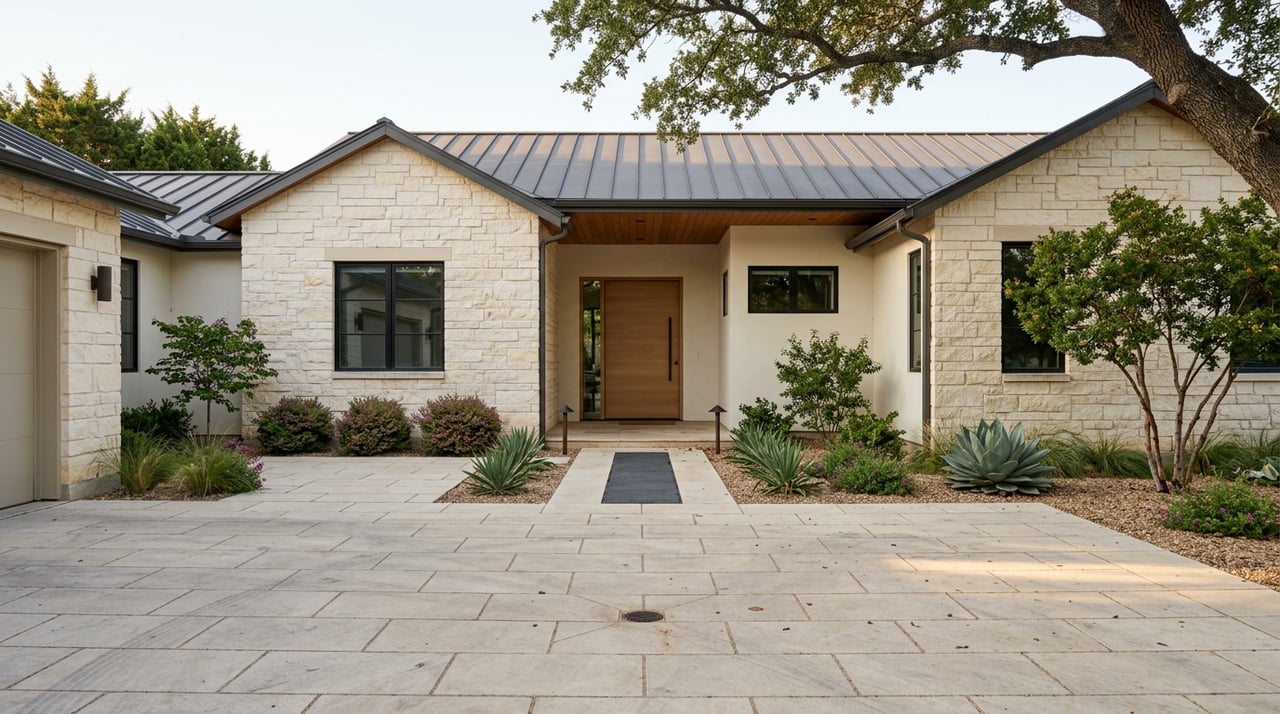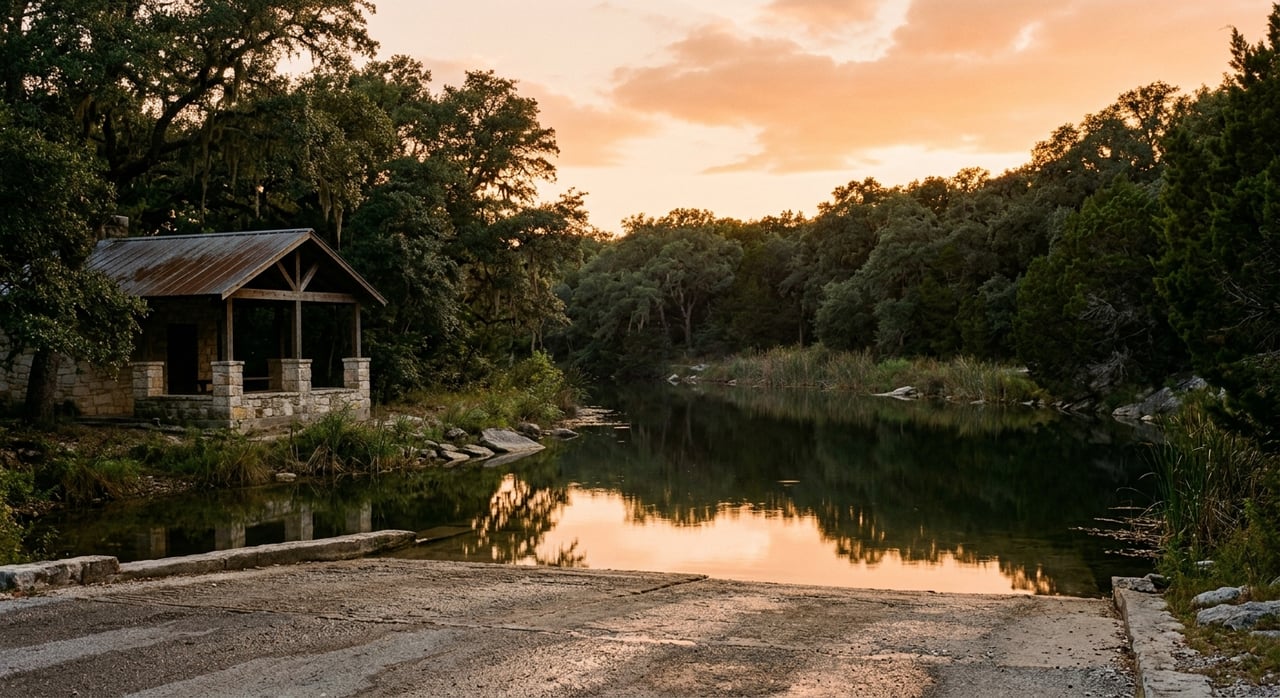
A tank comes up out of the ground on a Tuesday afternoon. Not because anything is wrong with it, but because the sale can't close until someone has actually seen it. A crew uncovers the inlet and outlet, checks the manhole covers, runs a water load test, and waits on paperwork that has nothing to do with the house's roof, its dock, or its view of the main body. This is what a Lake LBJ closing looks like on one side of an invisible line in Kingsland. On the other side of that same line, none of it happens at all.
The line isn't a property boundary. It's the edge of the Kingsland Municipal Utility District's sewer service area, and whether a specific lot sits inside it or outside it does more to shape a closing timeline than square footage, list price, or even the condition of the house itself.
An Unincorporated Town With Two Wastewater Systems
Kingsland has no city government. It's an unincorporated community straddling the Burnet and Llano county line, which means there's no single municipal utility running underneath every lot. Instead there are two systems that don't overlap.
Kingsland MUD, created in 1972, provides sewer collection and treatment along with septic waste processing, brush grinding, and recycling to a defined customer base. As of this year, that's roughly 3,400 accounts. If a lot falls inside that footprint, wastewater runs to a treatment plant and the closing proceeds like most closings do.
If a lot falls outside it, and a large share of Kingsland's older lakefront parcels do, the home runs on an individual septic system, formally called an on-site sewage facility, regulated not by the county but by the Lower Colorado River Authority. That single distinction is the fork in the road for anyone under contract on a Kingsland waterfront home this fall.
What "Continued Use" Actually Requires
LCRA requires an approval for continued use before a new owner can legally operate an existing septic system. It isn't optional and it isn't a formality. According to LCRA's own process documentation, a complete reinspection application includes a copy of the MLS listing, a floor plan of every structure showing each room's use, room dimensions, closet locations, and the heated and cooled square footage of the home.
If LCRA hasn't inspected the tank's inlet and outlet connections in the past ten years, those have to be physically exposed for the inspection. If the portholes or manholes haven't been checked in the past five years, those need to be accessible too. The property owner, not LCRA, is responsible for the digging. Once the system passes, approval is valid for six months from the date of issue. If ownership changes after that window closes, the whole application, fee, and inspection process starts over.
LCRA doesn't require the inspection to happen before closing, but it recommends it, and for good reason: the agency tells applicants to allow up to 30 days from submission before hearing back on approval or a request for more information. Older listings that walked buyers through this same process describe an application fee that has held steady around $150 for well over a decade, along with a possible requirement to retrofit non-conserving fixtures like older toilets and showerheads to lower-flow models before the system will pass.
None of this touches the home inspection a buyer already budgeted for. It's a separate track, running on its own clock, triggered the moment a septic-served property changes hands.
| Inside KMUD sewer service | On LCRA-regulated septic | |
|---|---|---|
| Governing authority | Kingsland MUD | LCRA On-Site Sewage Facilities Program |
| Closing-related requirement | None specific to wastewater | Approval for continued use (Form 1100) |
| Paperwork | Standard closing documents | Floor plan, room dimensions, MLS copy |
| Physical prep | None | Tank access exposed if not inspected recently |
| Timeline risk | Low | Up to 30 days for LCRA review, plus inspection scheduling |
| Approval shelf life | Not applicable | Six months from issue date |
The Plant That Explains Why Timing Matters Right Now
Kingsland's septic infrastructure has been under real strain, which is why a new septic-processing facility is going up at 241 Williamette Drive on the edge of town. Construction has been underway since earlier this year, and the plant is expected online this October, quadrupling the district's daily processing capacity from 10,000 gallons to 40,000 gallons.
The $14.8 million project replaces a facility that's been running for 15 years and needed constant patchwork. KMUD General Manager J. Horry put it plainly to the Daily Trib earlier this year: "You can't put a band aid on a cut throat." The old plant was a bottleneck not just for KMUD's own sewer customers, but for the independent septic haulers who service the septic-only properties scattered across Kingsland and the wider Highland Lakes area, since regional options for dumping septic waste are thin. Austin has a receiver. Lampasas, Gillespie, and Kerr counties either charge steep out-of-county rates or serve in-county customers only. Marble Falls takes in a limited amount.
That scarcity showed up in pricing. The per-gallon rate haulers pay to use the Kingsland facility jumped from 8.25 cents to 25 cents in 2025, an increase of roughly 203 percent. For a homeowner whose closing depends on a septic pump-out and inspection, that's not background noise. It's a cost that flows straight into what a seller pays to get a system inspection-ready, and what a buyer should expect if repairs come back on the punch list.
The new plant should ease the capacity crunch once it's fully online, but it doesn't change the underlying fact that septic-served Kingsland properties run on LCRA's calendar, not the county's, and that calendar has its own paperwork regardless of how much capacity the receiving plant has.
Why This Never Shows Up in the Listing Photos
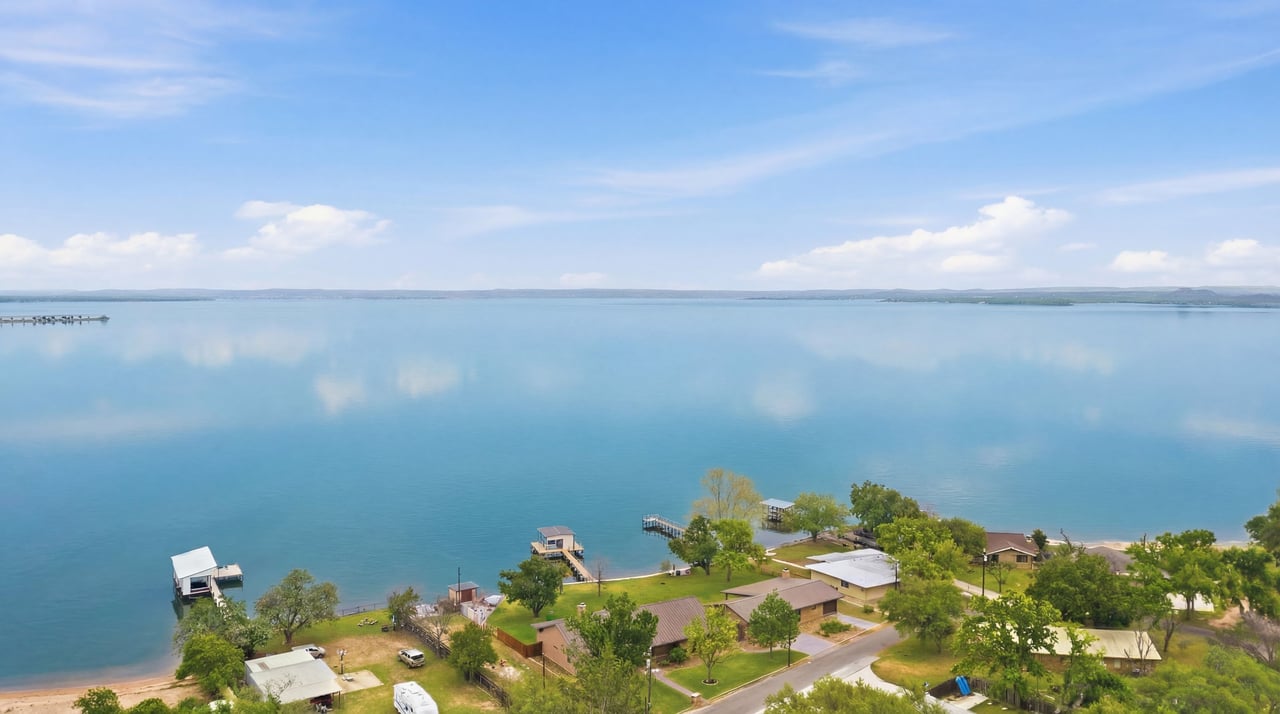
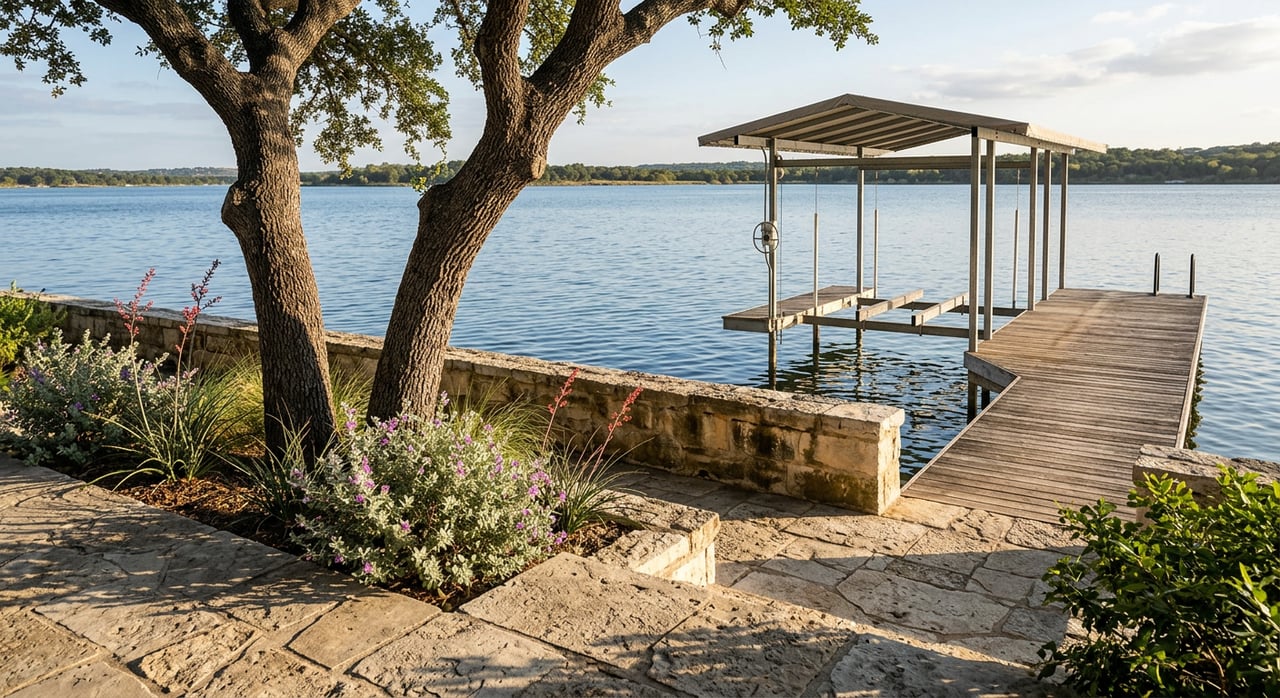
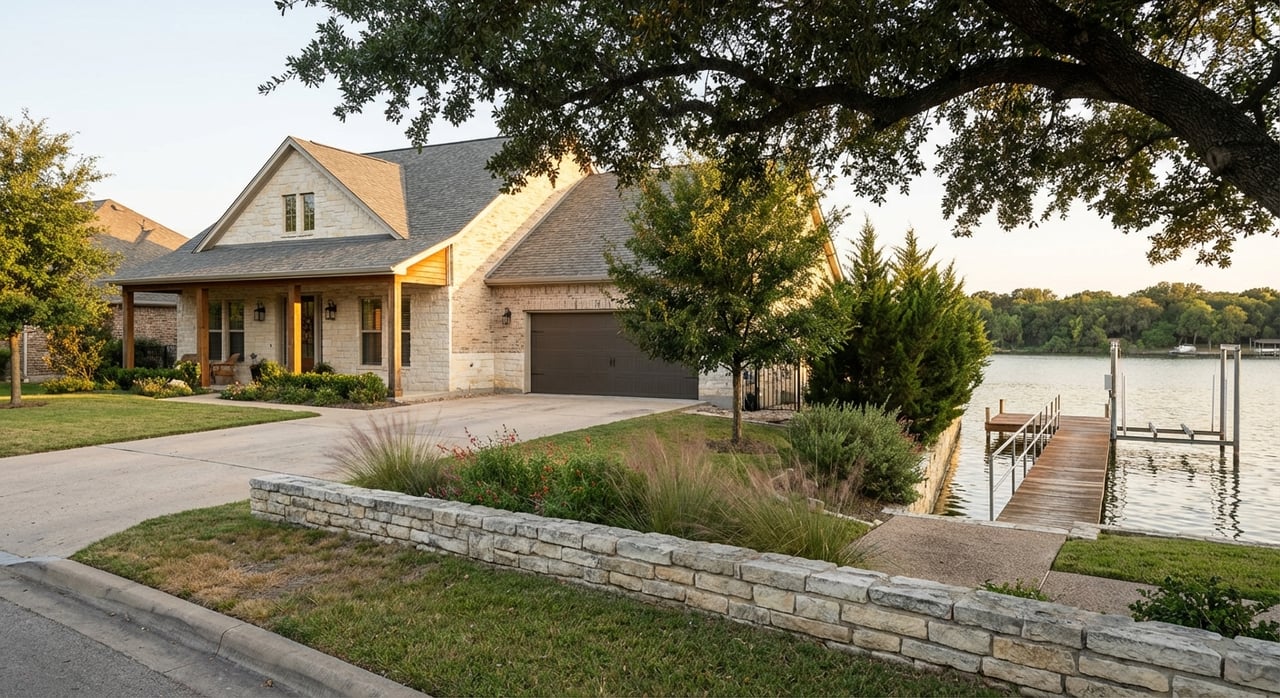
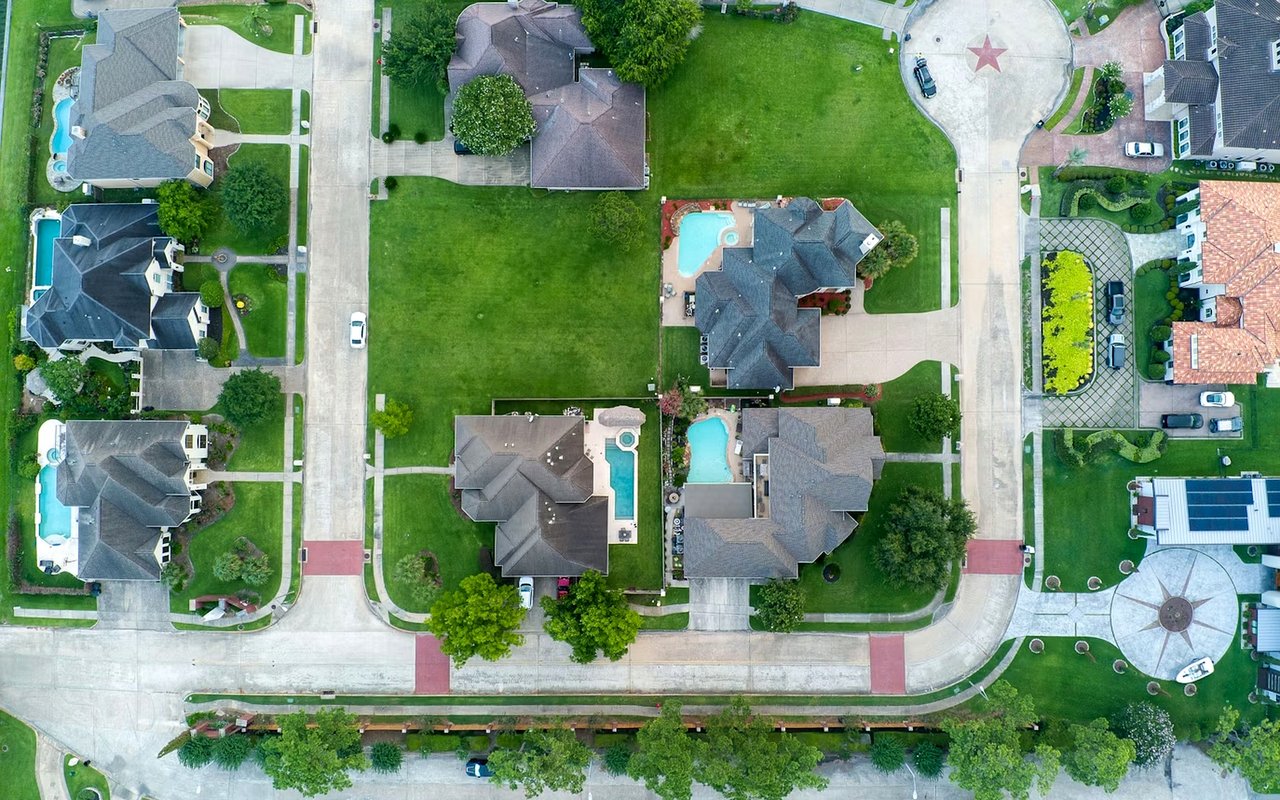
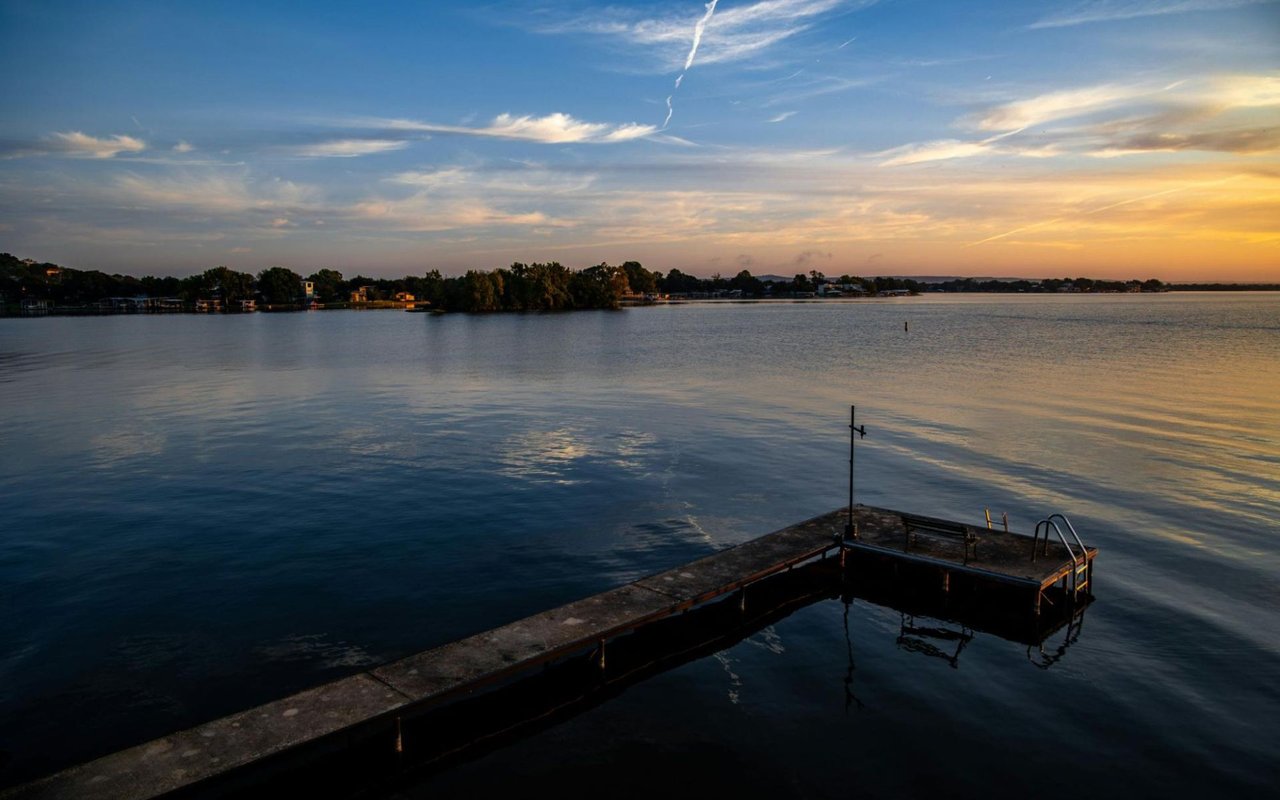
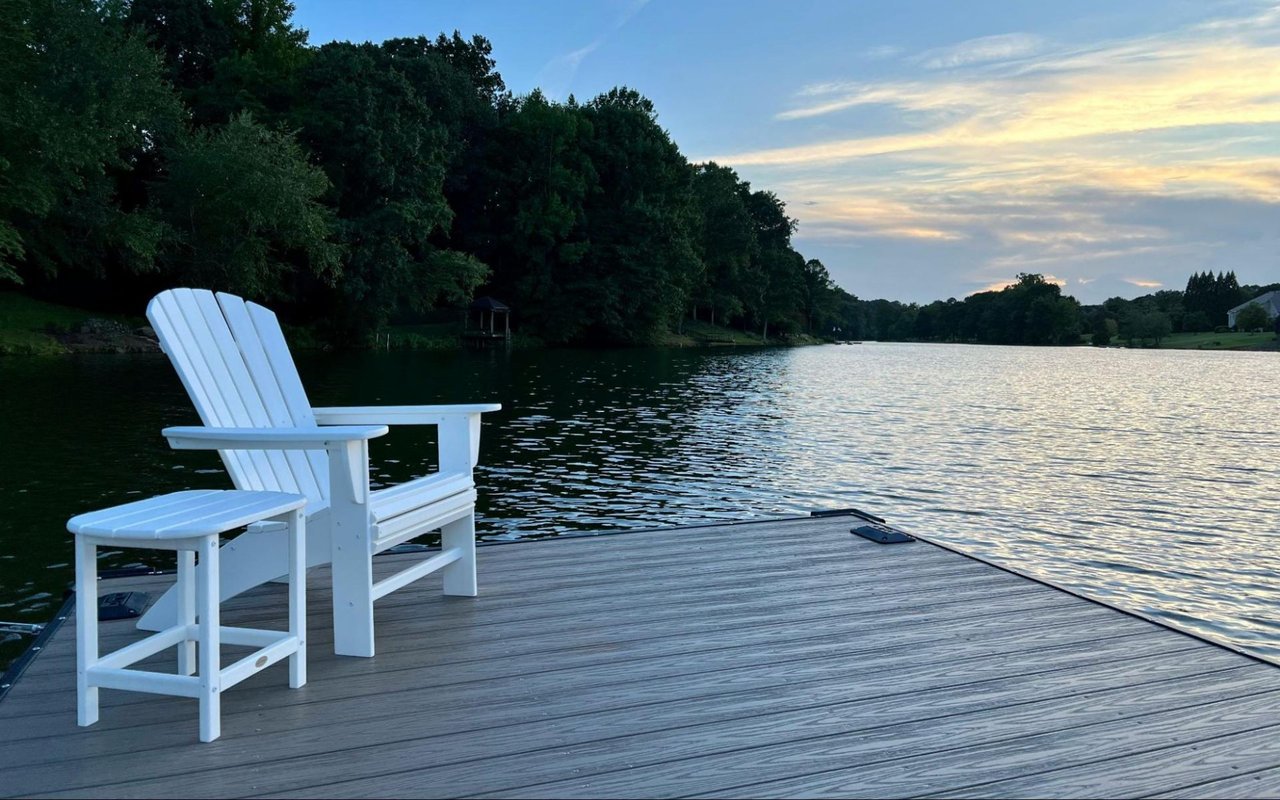
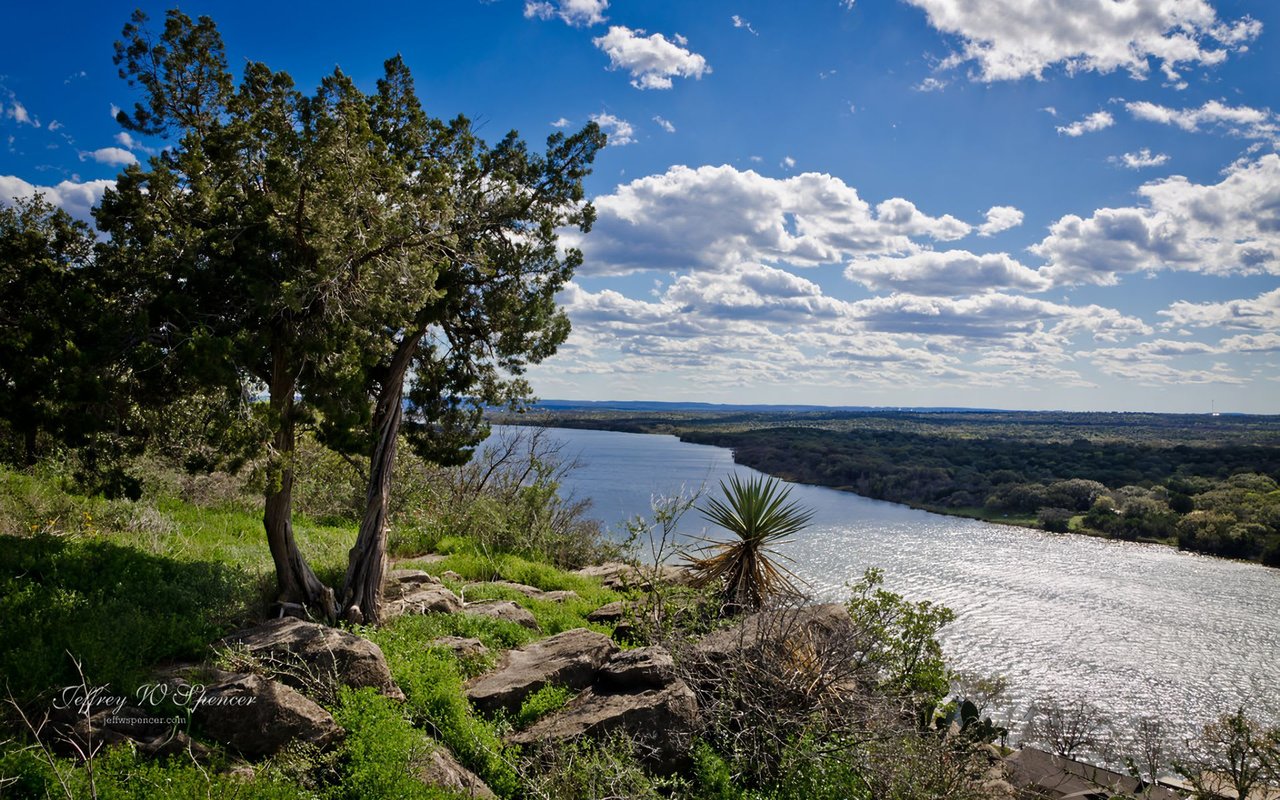
A listing photo can't show which side of the KMUD boundary a lot sits on. Neither can a drone shot of the dock. The only way to know before writing an offer is to ask directly, because the answer changes what a realistic closing timeline looks like.
Some Kingsland developments have small private or community sewer arrangements of their own, which are the exception rather than the rule. Water service in the area often runs through Kingsland Water Supply Corporation, a separate entity from KMUD's sewer system, which means a buyer can be on public water and private septic at the same address. Neighboring Lake LBJ communities handle this differently. Horseshoe Bay's newer sections run through utility districts formed decades ago specifically to bring central sewer to the resort community. Sunrise Beach Village has its own public utility district for water but limited sewer service, so many of its homes still carry the same LCRA continued-use requirement Kingsland does. Granite Shoals leans on public utility districts for water with limited wastewater infrastructure, so septic is still common there too.
Kingsland isn't unusual for having septic-served waterfront. It's unusual for how starkly the closing experience splits depending on a boundary line most buyers never think to ask about.
A Few Questions Worth Asking Before You Offer
Does every Kingsland waterfront home need an LCRA septic inspection? No. Homes inside the Kingsland MUD sewer footprint skip that requirement entirely. The only way to know is to ask whether the specific address is a KMUD sewer customer or runs on an individual OSSF.
If the seller already has a current LCRA approval, does that transfer to me? Approval for continued use is tied to the ownership change itself and is valid for six months from issue. A recent inspection can speed things up, but the new owner still needs the application processed in their name.
Does buying a home on KMUD sewer mean there's nothing to check? It removes the LCRA septic requirement, but every Lake LBJ closing still benefits from confirming water source, any private utility corporation billing, and whether the lot carries its own dock or shoreline permits, which run through a separate process entirely.
Before you write an offer on a Kingsland waterfront home, it's worth finding out which side of that utility line the property sits on and what that means for your timeline. LandMasters Real Estate works these closings regularly and can pull the utility status and LCRA file on a specific address before you're locked into a contract date that assumes a straightforward path to the closing table.